
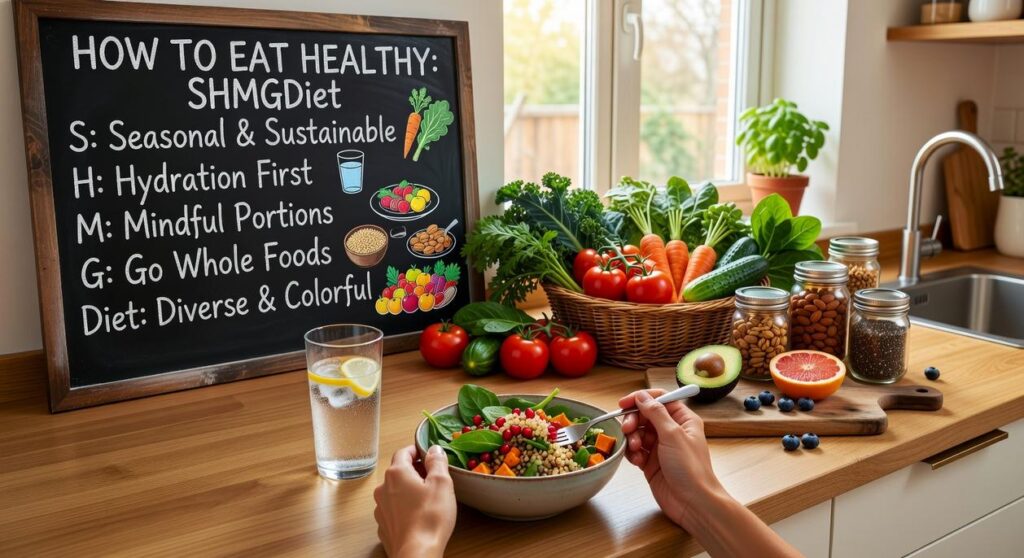
I’ve tried every diet out there. Most of them made eating healthy feel like a second job.
You’re probably tired of counting macros, weighing food, and following rules that don’t fit into your actual life. I get it. That’s why most diets fail.
Here’s what I learned: healthy eating doesn’t need to be complicated. It just needs to work in the real world.
This guide introduces the four core SHMGdiet principles. They’re simple. They’re backed by science. And they actually stick.
I’m not going to sell you on another restrictive plan that you’ll quit in three weeks. We focus on what actually works long-term at SHMGdiet. Real nutrition principles that have stood the test of time, not whatever’s trending on social media right now.
You’ll learn a straightforward framework you can use today. No meal prep marathons. No banned food lists. Just a clear path to eating better without the overwhelm.
By the end, you’ll have an actionable plan that fits your life. Not someone else’s idea of perfect.
Understanding the SHMGdiet Philosophy: The Four Pillars of Health
Let me be honest with you.
I’m tired of diets that feel like punishment.
You know the ones. They have you weighing chicken breast on a digital scale at 6am while your coffee gets cold. Your stomach growls by 10am and you’re already thinking about your next meal (or lack of one).
Some experts will tell you that strict tracking is the only way. They say if you’re not counting every calorie, you’re not serious about your health.
But here’s what they don’t mention.
That approach burns people out. Fast.
The SHMGdiet works differently. It’s not a diet at all. It’s a framework built on four pillars that actually make sense when you’re living a real life.
Structured Meal Timing. This means eating at consistent intervals so your body knows when fuel is coming. No more grazing all day or skipping meals until you’re so hungry you eat everything in sight.
Hydration Priority. Water before coffee. Water with meals. The kind of hydration that makes your skin feel different and your energy steady.
Macronutrient Balance. Protein, carbs, and fats at each meal. Not in perfect ratios, just present. You’ll notice how much longer you stay full when your plate has all three.
Gut Health Focus. Foods that don’t leave you bloated or sluggish. The kind that digest clean and keep things moving.
When you learn how to eat healthy shmgdiet style, you stop obsessing over numbers. You start noticing how food makes you feel two hours later, not just in the moment.
This is about consistency. Not perfection.
Pillar 1: Structured Meal Timing (S)
Your stomach growls at 11 AM even though you just ate breakfast at 9:30.
By 3 PM, you’re raiding the office snack drawer. Again.
Sound familiar?
Some people say meal timing doesn’t matter. They’ll tell you calories are calories, and it doesn’t make a difference when you eat them. Just focus on what you eat, not when.
Here’s where I disagree.
Your body isn’t just a calorie calculator. It runs on rhythms. When you eat at random times, you confuse those rhythms. Your blood sugar spikes and crashes. Your hunger signals get all mixed up.
I’ve watched this play out hundreds of times. Someone eats breakfast at 7 AM one day, 10 AM the next, then skips it entirely on Wednesday. They wonder why they can’t stop thinking about food.
The fix is simpler than you think.
Eat at the same times every day.
I’m talking about training your body like you’d train for anything else. When you sit down for breakfast at 8 AM consistently, your body learns. That first bite of warm oatmeal becomes a signal. Your metabolism kicks in. Your hunger hormones start working with you instead of against you.
Here’s what this looks like in practice:
- Pick 3 to 4 eating windows that fit your life
- Stick to them within a 30-minute range
- Let your body adapt for at least two weeks
For most people, something like 8 AM, 12 PM, 4 PM, and 7 PM works well. But you might need different times based on your schedule.
The key is consistency.
When you follow how to eat healthy shmgdiet principles with structured timing, you stop fighting your body. That constant mental chatter about food quiets down. You know when your next meal is coming, so you don’t panic and grab whatever’s nearby.
Plan your week ahead. Sunday afternoon, map out what you’ll eat and when. It takes 20 minutes and saves you from standing in front of the fridge at 6 PM with no plan.
If you work long days, pack snacks in clear containers. The crunch of fresh carrots or the creamy texture of Greek yogurt becomes your 4 PM routine instead of vending machine chips.
One thing though.
Structure doesn’t mean rigidity. If you’re genuinely hungry between meals, eat something small. But notice the difference between real hunger (that hollow feeling in your stomach) and boredom or stress eating.
Most people find that after two weeks of consistent timing, the between-meal cravings fade. Your body gets it.
Pillar 2: Hydration as a Priority (H)
You probably know water matters.
But here’s what most people get wrong. They treat hydration like an afterthought. Something to worry about only when they’re already thirsty.
By then, you’re already behind.
Your body needs water for everything. Energy production. Brain function. Digestion. Even burning fat (which is why understanding which diet to lose belly fat shmgdiet works best starts with getting the basics right).
And that feeling you think is hunger at 3pm? Half the time it’s just dehydration.
Here’s what I recommend you do.
Start with 8 to 10 glasses a day. That’s roughly 2 liters. If you’re working out or it’s hot outside, bump it up.
But knowing the number doesn’t help if you forget to actually drink.
Make it automatic.
Pour a large glass of water first thing when you wake up. Before coffee. Before checking your phone. Just drink it.
Keep a reusable bottle with you. On your desk. In your bag. In your car. When it’s sitting right there, you’ll drink more without thinking about it.
Don’t like plain water? I get it. Add lemon slices or cucumber. Throw in some mint leaves. Herbal teas count too.
The goal isn’t perfection. It’s consistency.
When you know how to eat healthy shmgdiet principles apply, you realize hydration isn’t separate from nutrition. It’s part of it.
Your body works better when it has what it needs. Water is non-negotiable.
Pillar 3: Macronutrient Balance (M)
Here’s where things get a bit tricky.
Everyone talks about macros like they’re some exact science. Eat this much protein, that many carbs, and you’re golden.
But I’ll be honest with you. The perfect macro split? It doesn’t exist.
What works for your friend might leave you dragging through your afternoon. What helps someone lose weight might make another person gain it. And the research keeps changing on what ratios are actually best.
That said, there’s one thing I know for sure.
Every meal needs all three macros working together. Protein builds and repairs your tissue. Carbs give you energy to actually function. Fats keep your hormones in check (which matters more than most people realize).
Skip one and your body notices.
The Plate Method
I’m going to give you something simple because counting macros down to the gram makes most people quit after a week.
Look at your plate. That’s it.
Fill half with non-starchy vegetables. Think broccoli, spinach, peppers. The stuff that gives you nutrients without spiking your blood sugar.
One quarter goes to lean protein. Chicken, fish, tofu, beans. Whatever fits how to eat healthy shmgdiet in your life.
The last quarter? That’s your complex carbs. Quinoa, sweet potato, brown rice. Not the processed stuff that leaves you hungry an hour later.
Then add a small serving of healthy fats. Avocado, nuts, a drizzle of olive oil.
Now here’s what I’m not sure about. Some experts say the quarter system is too carb heavy for certain people. Others argue it’s not enough carbs for active individuals. The nutrition advice shmgdiet community debates this constantly.
My take? Start here and adjust based on how you feel. If you’re tired all the time, maybe you need more carbs. If you’re always hungry, bump up the protein or fats.
Your body will tell you what it needs if you pay attention.
Pillar 4: Gut Health Focus (G)
Your gut does more than digest food.
It talks to your brain. It trains your immune system. It even affects your mood (which explains why you feel terrible after eating junk for a week straight).
The science backs this up. A healthy gut microbiome helps with everything from fighting off colds to managing stress levels.
But here’s what you need to do about it.
Start with probiotic-rich foods. I’m talking yogurt, kefir, and sauerkraut. These introduce good bacteria into your system.
Then feed those bacteria with prebiotic foods. Oats, bananas, onions, and garlic give your gut what it needs to thrive.
| Food Type | Examples | What It Does |
|———–|———-|————–|
| Probiotics | Yogurt, kefir, sauerkraut | Adds good bacteria |
| Prebiotics | Oats, bananas, onions, garlic | Feeds good bacteria |
When you learn how to eat healthy shmgdiet style, gut health becomes automatic. You’re not forcing it. You’re just choosing foods that work with your body instead of against it.
Your Sustainable Path Forward with SHMG Principles
You now have the complete guide to maintaining a healthy diet using the four SHMG principles: Structured Timing, Hydration, Macronutrient Balance, and Gut Health.
This framework solves the problem of overly complex diets. You get a simple strategy that actually sticks.
Most diets fail because they’re built on restriction. How to eat healthy shmgdiet focuses on building habits you can maintain for years, not weeks.
The difference is sustainability over perfection.
Start today by choosing just one principle to focus on this week. Maybe you commit to drinking more water or timing your meals consistently.
Build from there. Add another principle when the first one feels natural.
You came here looking for a better way to eat. Now you have a framework that works with your life instead of against it. Homepage.