
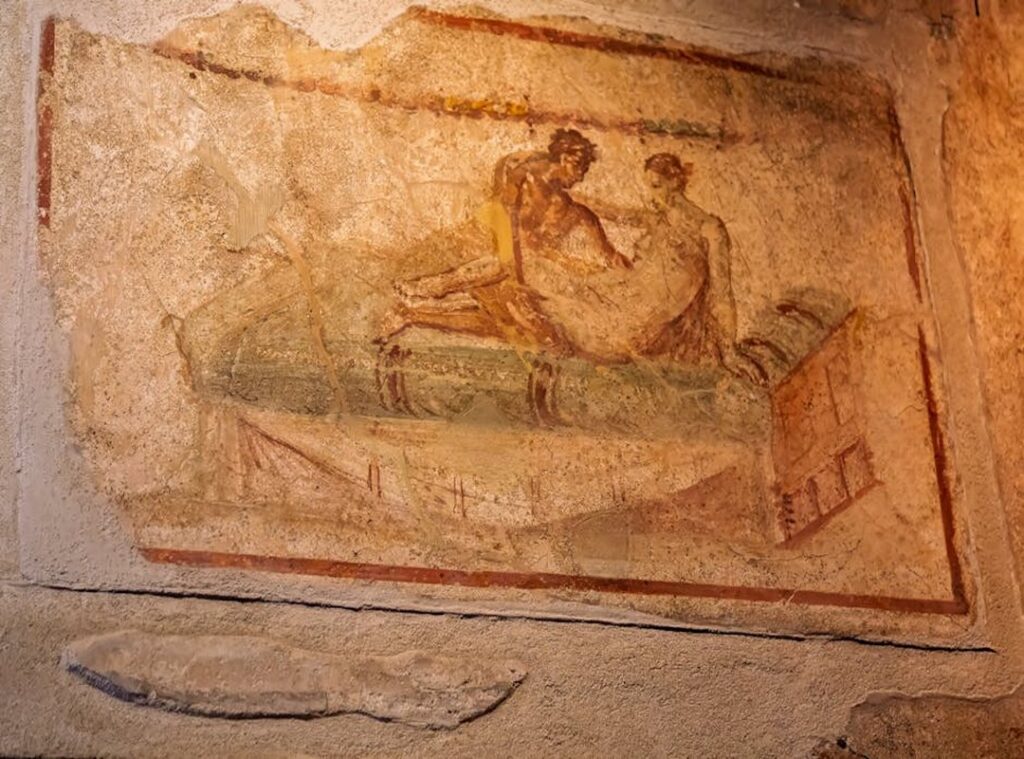
Two figures, locked in a final, poignant embrace, frozen in time by the eruption of Mount Vesuvius. This image is often interpreted as the pompeii bodies lovers kissing, a symbol of love eternal. But who were these two people?
What’s the real story behind their famous plaster cast? This article will dive into the archaeological science and recent discoveries that have challenged long-held beliefs about this pair. You’ll get a clear understanding of how these casts were made and what modern technology has revealed about the victims’ identities.
From Void to Vision: How the Pompeii Bodies Were Preserved
When you think of the “bodies” at Pompeii, you might imagine petrified remains. But that’s not the case, and the bodies are actually plaster casts.
Giuseppe Fiorelli, an archaeologist, developed a unique process in the 1860s. He figured out how to capture the final moments of the victims in incredible detail.
The volcanic ash and pumice from the eruption of Mount Vesuvius hardened around the victims’ bodies. This created a solid shell. Over time, the soft tissues and clothing decomposed, leaving a perfect void or cavity in the hardened ash.
Archaeologists then poured liquid plaster into these voids. As the plaster hardened, it captured the exact shape and posture of the person, including their facial expressions.
One of the most famous examples is the pompeii bodies lovers kissing. It’s a poignant reminder of the human stories behind the tragedy.
This method has allowed us to see the last moments of the people of Pompeii. It’s a powerful way to connect with history and understand the human side of such a catastrophic event.
A Shocking Discovery: Unmasking the ‘Lovers of Pompeii’
For years, everyone assumed the famous pompeii bodies lovers kissing cast depicted a man and a woman in a romantic embrace. It was a touching and tragic image that captured the imagination.
But science has a way of surprising us. In 2017, researchers conducted DNA testing and CAT scans on the casts. The results were groundbreaking.
Both individuals were male.
- DNA testing revealed their biological sex.
- CAT scans provided detailed insights into their bone structure and teeth.
Further analysis showed that they were not closely related. This ruled out a father-son or brotherly relationship. So, who were these two men?
The new interpretations are fascinating, and were they lovers? Friends?
Or just two strangers seeking comfort in their final, terrifying moments? The scientific evidence completely changed the narrative surrounding one of history’s most famous artifacts.
This discovery challenges our assumptions and opens up new possibilities for understanding the past. It reminds us that history is full of surprises, and sometimes, the truth is more complex than we ever imagined. this guide
An Embrace, Not a Kiss: Analyzing the Final Pose
Start with an anecdote about visiting Pompeii. I remember standing in front of the casts of the pompeii bodies lovers kissing and feeling a mix of awe and sorrow. The intimacy of their pose was striking, but it made me wonder—was it really a kiss?
The physical positioning of the two figures is close, but there’s no definitive evidence of a kiss. Their faces are near, but not touching, and this detail is crucial.
| Aspect | Description |
|---|---|
| Physical Positioning | Close embrace, faces near but not touching |
| Evidence of Kiss | No definitive proof |
The term ‘lovers’ is a modern interpretation. It’s based on the perceived intimacy of their pose. But who are we to assume?
Maybe they were just seeking comfort.
From a scientific perspective, their positions could be the result of ‘pugilistic attitude’ or cadaveric spasm. These are post-mortem muscle contractions caused by extreme heat. It’s a grim but plausible explanation.
But there’s another, more humanistic theory. In the face of an unimaginably horrific event, seeking physical comfort from another person is a natural instinct. It doesn’t matter if they were lovers or strangers.
The pose captures a moment of shared humanity and terror. It may or may not have been romantic. What it does show is the deep, primal need for connection in the face of disaster.
Beyond the Lovers: Other Tragic Figures Frozen in Time

When we think of Pompeii, the image of the pompeii bodies lovers kissing often comes to mind. But they are just one part of a larger, more complex story.
- The Garden of the Fugitives captures a group of 13 people, including children, who were desperately trying to escape.
- A dog, contorted on its back as it struggled against its chain, is another heart-wrenching scene.
- The cowering man, hunched in a protective posture, adds to the human drama.
These casts remind us that each figure represents a real person with their own hopes and fears. It’s a stark reminder of the human cost of that fateful day.
I’m not sure if we can fully understand the terror and chaos they experienced. But by acknowledging these stories, we honor their memory and the complexity of their final moments.
Why This Image Still Haunts and Fascinates Us
The famous pompeii bodies lovers kissing were actually two men, and their story is more complex than the simple romantic tale often told. This revelation adds layers to our understanding of the past.
It challenges us to reconsider the narratives we construct around historical artifacts. Despite this new information, the image remains deeply moving. It captures a moment of humanity in the face of an unimaginable disaster.
The cast’s enduring appeal lies in its ability to humanize a catastrophic historical event. It connects us directly to the fear and final moments of its victims. Whether they were lovers, friends, or strangers, their final embrace is a timeless and universal symbol of seeking solace in the face of death.
 Travison Lozanold is the kind of writer who genuinely cannot publish something without checking it twice. Maybe three times. They came to weight loss strategies through years of hands-on work rather than theory, which means the things they writes about — Weight Loss Strategies, Healthy Eating Tips, Meal Planning Ideas, among other areas — are things they has actually tested, questioned, and revised opinions on more than once.